With the summer holidays just around the corner, water awareness and water safety become more important than ever!
Many families will spend time at the beach, in swimming pools, lakes, rivers, and at water parks. While all these activities are fun, and a great way to cool off in the heat, they pose dangers if not careful.
Being aware of water safety helps prevent accidents that can be avoided.
Never swimming alone, staying within safe swimming areas, and listening to lifeguards is important. Adults should always supervise children near water, even in shallow water.
Learning to swim is a life skill. Swimming lessons help to make people feel more confident and safer in the water. Knowing how to float, tread water, and call for help in an emergency could one day help them or someone else.
Everyone should understand the dangers of water. The sea may have strong currents, waves, and it may not be as warm as it looks! People also do not realise that sea conditions can change quickly. On the other hand, rivers and lakes can hide a multitude of concerns such as debris underneath the surface, strong currents and water contamination.
It is not just the physical water that can be dangerous. Sun safety and staying hydrated is important too. If you are out at the beach, or lake, during the nice weather make sure to be drinking enough water, wearing sunscreen, and taking breaks in the shade as this will help to prevent dehydration, heatstroke and sunburn!
Overall, having water awareness allows everyone to enjoy summer activities responsibly and safely. By following safety rules, learning swimming and rescue skills, and staying alert around water, families can have a safe and enjoyable holiday season.
We should all take note of the guidance from the RLSS and the RNLI.
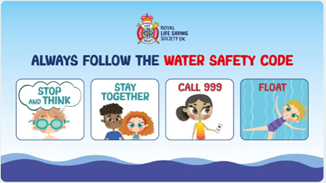
The RLSS water safety code, which many of our P4 swimmers will have covered and potentially even made us a lovely poster about!
Watch their cartoon: https://vimeo.com/863949936
‘Float to Live’, is the guidance from the RNLI, we strongly recommend you take the time to watch the video they have put together as part of their toolkit.